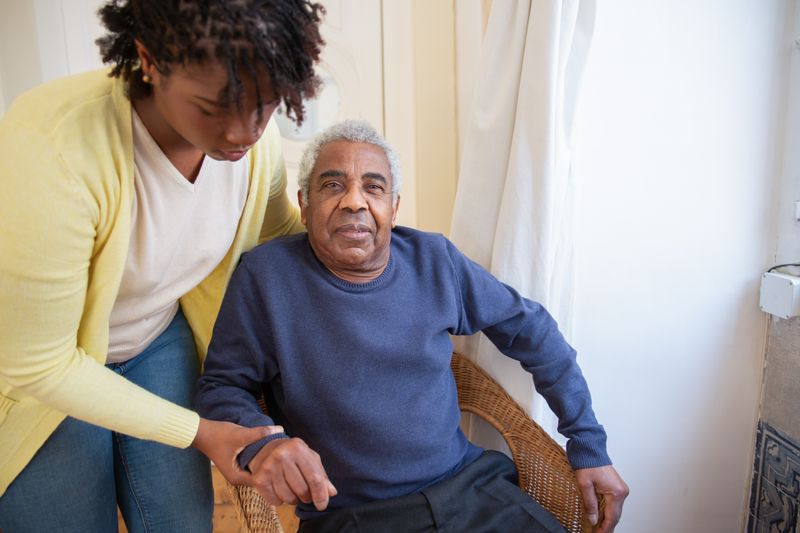
You have probably been watching for a while. Maybe you noticed it at Christmas, or on a weekend visit. Something about the way your mum or dad handles the stairs is not quite right any more.
Noticing these signs does not make you overbearing. It makes you observant. And being observant is the first step to helping someone you love stay safe in their own home.
The 7 signs to watch for
1. They have fallen or stumbled on the stairs
This is the most serious sign, and often the one that prompts families to act. Over 1,000 people die from stair falls in England and Wales each year (RoSPA), and many more are seriously injured. If your parent has had even a near-miss, it is worth taking seriously.
2. They are going upstairs less often
Pay attention to whether your parent avoids going upstairs during the day. If they are putting off trips to the bedroom or bathroom until they absolutely have to, their stairs may already be a barrier to their daily life.
3. They are sleeping downstairs
If your parent has started sleeping on the sofa or has moved a bed downstairs, this is a clear sign that the stairs have become too much. It can also be a sign they are embarrassed to admit they are struggling.
4. They hold the bannister with both hands
Watch how they use the stairs when they think you are not looking. Using both hands on the bannister, or pulling themselves up rather than walking, suggests they do not feel stable.
5. They avoid the upstairs bathroom
If your parent has stopped using the upstairs bathroom or is making do with a downstairs toilet when they have a perfectly good bathroom upstairs, the stairs may be the reason.
6. They seem out of breath after climbing stairs
Breathlessness on the stairs is common with conditions like COPD, heart conditions, and general deconditioning. If your parent needs to rest at the top or bottom of the stairs to catch their breath, a stairlift could make a real difference. See our condition-specific guides for more.
7. They have stopped going to bed at a normal time
Watch for changes in routine. If your parent stays up very late (avoiding the trip upstairs) or goes to bed very early (getting it over with while they still have energy), the stairs may be driving the change.
What these signs mean
None of these signs on their own necessarily means your parent needs a stairlift. But if you are recognising two or three of them, it is worth having a conversation. The sooner you act, the more options you have -- including grants that can cover the full cost.
You are not overreacting. You are paying attention. And that attention could prevent a serious fall.
What to do next
If these signs sound familiar, the next step is to talk to your parent. We know that can feel daunting, so we have written a practical guide to having the conversation that most families find helpful.
If you are not sure whether it is the right time, our family checklist can help you think it through.